Fine line tattooing is the fastest-growing segment of Australia’s tattoo industry. Delicate florals winding along a forearm, tiny script on a wrist, minimalist geometric shapes behind an ear, and hyper-detailed micro-realism pieces that look like miniature photographs — these are the styles dominating client requests from Sydney salons to Perth studios. Each style demands specific technical skills, and understanding the differences is essential for any aspiring tattoo artist. A fine line tattoo course teaches you the techniques behind every major fine line style so you can enter the industry with the versatility clients expect.
The Fine Line Revolution in Australian Tattooing
The Australian tattoo industry has undergone a dramatic aesthetic shift over the past five years. Bold traditional designs and heavy blackwork, while still popular, now share the spotlight with ultra-delicate fine line work that appeals to a broader demographic — particularly women aged 20 to 40 who are getting their first or second tattoo. According to a McCrindle Research survey, nearly one in three Australian adults now has at least one tattoo, and demand for fine line work is driving much of the growth.
This shift has created enormous opportunity for trained fine line artists. The supply of skilled fine line tattooists has not kept pace with demand, and many studios are actively recruiting artists who specialise in this style. A fine line tattoo course is the fastest way to develop these in-demand skills and position yourself within a booming market.
Minimalist Line Work
Minimalist fine line tattoos strip a design down to its essential elements — single continuous lines, simple geometric shapes, tiny symbols, and clean outlines without shading or fill. A single-needle outline of a wave, a small heart on the inside of a finger, or a delicate constellation on the collarbone are all examples of this style.
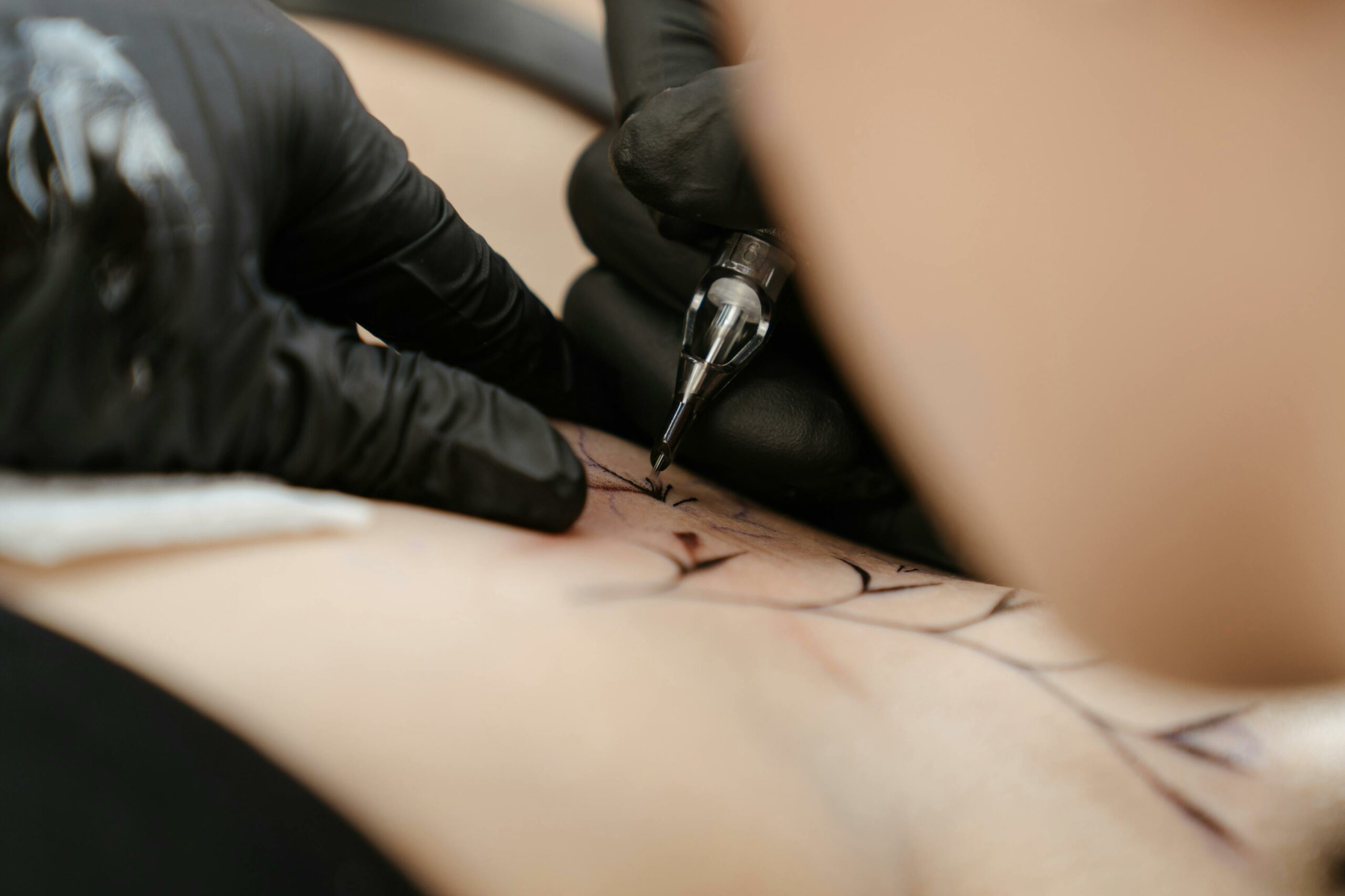
The technical challenge of minimalist work is that every line must be perfect. There is nowhere to hide imperfections when the design is a single, exposed line. Your needle depth must be consistent — too shallow and the ink will not hold; too deep and you risk blowouts where ink spreads beneath the skin into a blurred haze. Your hand speed must be steady and controlled, pulling the needle through the skin at a constant rate to produce even ink saturation along the entire line.
A fine line tattoo course builds this foundational control through progressive exercises on practice skin before you ever work on a live client. You start with straight lines, progress to curves and circles, and gradually develop the muscle memory and hand-eye coordination that clean minimalist work demands.
Floral Fine Line Tattoos
Florals are the single most requested category of fine line tattoo in Australia. Roses, peonies, wildflower bunches, eucalyptus branches, native Australian botanicals like banksias and waratahs, and delicate single-stem designs are perennial favourites. The organic shapes and flowing lines of botanical subjects lend themselves beautifully to fine line execution.
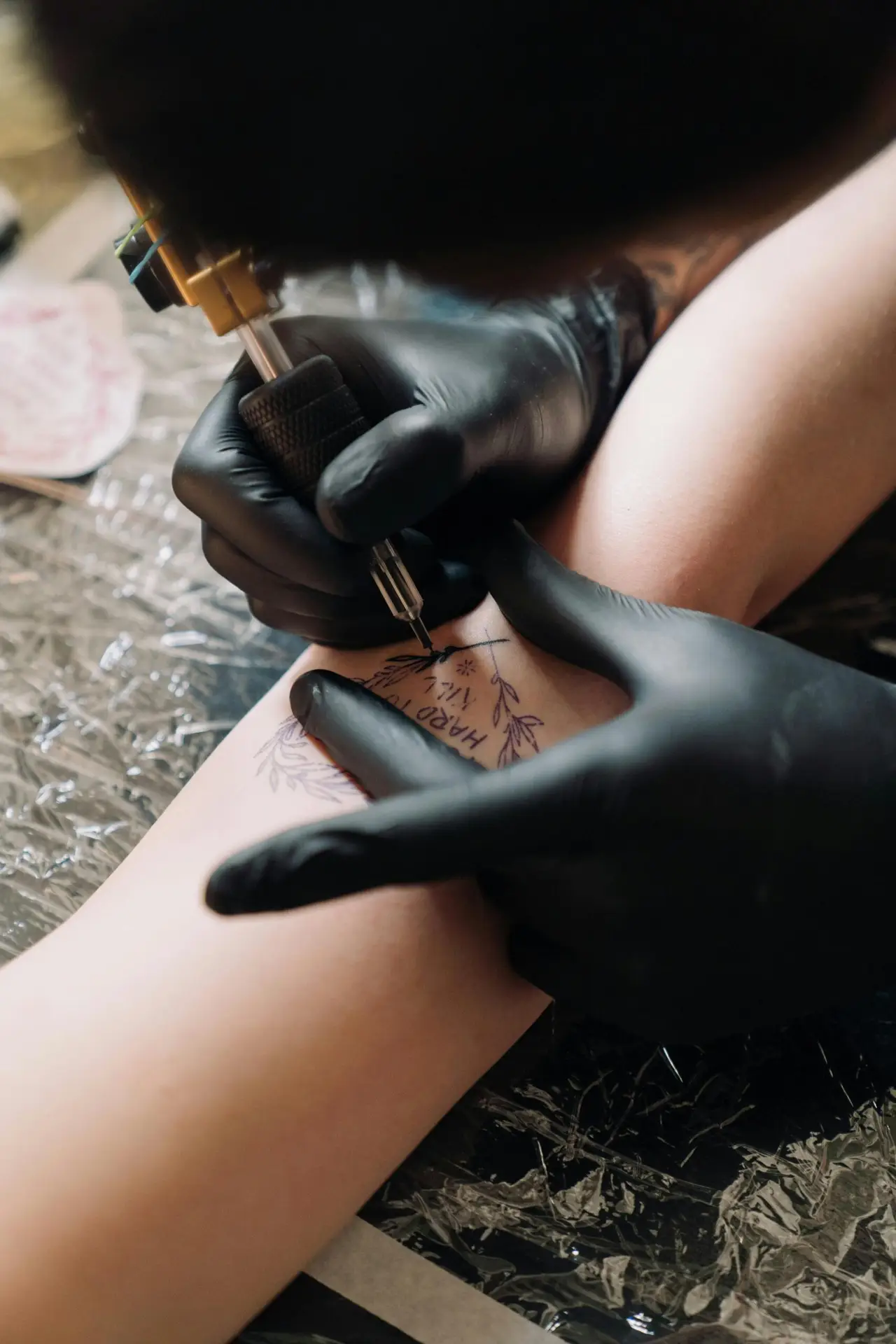
Floral fine line work introduces additional technical elements beyond simple line control. You need to understand how to create the illusion of depth and dimension through line weight variation — slightly thicker lines where petals overlap and thinner lines for delicate edges and stems. Stipple shading (creating tone through tiny dots rather than solid fill) adds three-dimensionality without the heavy appearance of traditional shading.
Whip shading is another technique commonly used in fine line florals. By moving the tattoo machine in a whipping motion as you pull away from the skin, you create a soft, gradient-like transition from dark to light. This technique produces the ethereal, watercolour-like quality that makes fine line florals so visually striking.
A fine line tattoo course covers botanical drawing fundamentals alongside tattooing technique. Understanding how flowers and leaves are structured — how petals layer, how stems branch, how leaves attach — allows you to create designs that are botanically convincing as well as aesthetically beautiful. The Royal Botanic Gardens of Australia provide botanical reference libraries that many tattoo artists use for design research.
Script and Lettering
Script tattoos — names, dates, quotes, single words — are among the most personal and emotionally significant tattoos clients request. They are also among the most technically demanding. A single misshapen letter or inconsistent spacing ruins the entire piece, and there is no way to conceal the error without a complete cover-up.
Fine line script requires impeccable line control combined with an understanding of typography and lettering. Different script styles — cursive, serif, sans-serif, calligraphic, handwritten — each have distinct characteristics that affect how you approach the tattoo. Cursive scripts require flowing, connected strokes. Serif lettering demands precise, consistent line weights with crisp terminals. Calligraphic styles incorporate thick-to-thin transitions that require deliberate variation in needle depth and hand pressure.
Stencil application for script is critical. The letters must be evenly spaced, properly aligned, and scaled to fit the body placement naturally. A word that looks balanced on paper may need adjustment to follow the contour of a forearm, wrist, or ribcage. A fine line tattoo course teaches stencil placement techniques specific to script and lettering, including how to use transfer paper effectively and how to freehand-adjust stencils to match body geometry.

Micro-Realism
Micro-realism is the most technically advanced fine line style — miniature photorealistic images rendered in fine line and delicate shading. A tiny portrait of a pet, a realistic miniature flower, a detailed eye, or a small landscape scene all fall into this category. Micro-realism commands the highest prices in the fine line market because of the skill level required.
The technical demands of micro-realism include extremely precise line work at very small scales, mastery of multiple shading techniques (stipple, whip, soft grey wash), understanding of value and contrast (how dark and light areas create the illusion of three-dimensionality), and the ability to simplify a photographic reference into a design that will read clearly as a small tattoo.
One of the critical lessons a fine line tattoo course covers is understanding how tattoos age. Micro-realism pieces with insufficient contrast or lines placed too closely together will blur and merge over time as ink migrates slightly within the skin. Learning to design with longevity in mind — building in adequate spacing and contrast — ensures your micro-realism work looks stunning not just on day one, but for years afterward.
Equipment and Setup for Fine Line Work
Fine line tattooing requires specific equipment choices. A rotary tattoo machine is the standard for fine line work due to its consistent needle movement, quiet operation, and precise control. Pen-style rotary machines are particularly popular among fine line artists because their ergonomic design reduces hand fatigue during long sessions.
Needle configuration is critical. Fine line work typically uses single needles (1RL) or tight liner groupings (3RL) to produce the thin, precise lines that define the style. Shader configurations (magnum or round shader) are used for stipple and whip shading techniques. A fine line tattoo course includes a professional tattoo kit with the equipment you need to begin practising immediately.
Ink selection matters for fine line longevity. High-quality, finely ground tattoo inks produce smoother lines and more consistent tone. Black and grey work dominates fine line tattooing, though delicate colour work is growing in popularity. Understanding ink dilution — mixing with distilled water or witch hazel to achieve grey wash tones — is essential for shading techniques.
For comprehensive safety and hygiene standards, the Australian Government’s tattoo safety guidelines and your relevant state health department provide the regulatory framework that all tattoo artists must follow. A fine line tattoo course covers hygiene and infection control as a core component of your training.
Building Your Fine Line Portfolio
Your portfolio is your primary marketing tool as a tattoo artist. Clients choose their artist based on the quality and style of their previous work, so building a strong, cohesive portfolio is essential before you begin taking paying clients.
Start with practice skin and progress to willing friends and family members who understand you are building your skills. Document every piece with high-quality photographs — consistent lighting, clean background, sharp focus on the tattoo. Your portfolio should showcase the range of styles you can execute while maintaining the quality standard clients expect.
Social media — particularly Instagram — is the primary platform where clients discover and evaluate tattoo artists. A well-curated Instagram feed with consistent photography style, clear close-up images of healed tattoos, and work-in-progress content builds your reputation and attracts inquiries. Understanding how to market yourself effectively is a business skill that complements your artistic training. A spray tan course or any other beauty qualification can also diversify your service offering and income streams.
For inspiration and staying current with global fine line trends, Tattoodo is one of the largest tattoo community platforms, featuring artist portfolios and trending styles from around the world.
Start Your Fine Line Tattoo Career
Fine line tattooing is one of the most exciting and in-demand creative careers available in Australia today. If you are ready to develop the technical skills, artistic eye, and professional knowledge that fine line work demands, explore the Certificate in Fine Line Tattooing at Australian Beauty School. With a professional tattoo kit included, flexible online study, and expert guidance from practising tattoo artists, you will be creating beautiful fine line work before you know it. Speak with a beauty pro today and start your journey into one of Australia’s most creative careers.