Hair extensions are one of the most profitable services in the Australian beauty industry, with a single application generating anywhere from $300 to $1,500 depending on the method, hair quality, and volume required. Clients seek extensions for volume, length, colour without chemical processing, and confidence. But the extension market offers multiple methods — tape-in, clip-in, keratin bond, micro-ring, and weft — and each has distinct advantages, limitations, and application techniques. A hair extension course teaches you every major method so you can recommend and deliver the right solution for every client who sits in your chair.

The Australian Hair Extension Market
Australia’s hair extension market has grown significantly over the past decade, driven by social media visibility, celebrity influence, and the increasing quality of human hair products available. Extensions are no longer reserved for special occasions or red carpet events — many Australian women wear them daily as part of their routine beauty maintenance.
This consistent demand creates an excellent business opportunity. Unlike many beauty services that are one-off appointments, extension clients return every six to twelve weeks for maintenance, removal, or reapplication. A single extension client can generate $3,000 to $6,000 in annual revenue through regular appointments. Building a base of 20 to 30 recurring extension clients creates a substantial and predictable income stream.
A hair extension course prepares you to serve this market by teaching every major method, client consultation skills, colour matching, and the maintenance protocols that keep clients happy and returning.
Tape-In Extensions: The Australian Favourite
Tape-in extensions are the most popular semi-permanent method in Australia. They consist of small wefts of hair pre-attached to thin adhesive strips. Two wefts are sandwiched around a section of natural hair — one above and one below — creating a secure, flat bond that sits flush against the scalp.
The advantages of tape-ins are numerous. Application is relatively fast (60 to 90 minutes for a full head), the bonds are lightweight and comfortable, they lie flat under natural hair without visible bumps, and they can be removed and reapplied (using new tape) every six to eight weeks, making them a cost-effective long-term option for clients.
A hair extension course teaches the specific application technique for tape-ins — sectioning patterns that ensure even distribution, proper adhesive activation, bond placement that avoids the hairline and part line, and the finger-press technique that ensures secure adhesion without air pockets. You also learn removal technique using bond-dissolving solution and gentle detangling to protect the client’s natural hair.

Keratin Bond Extensions
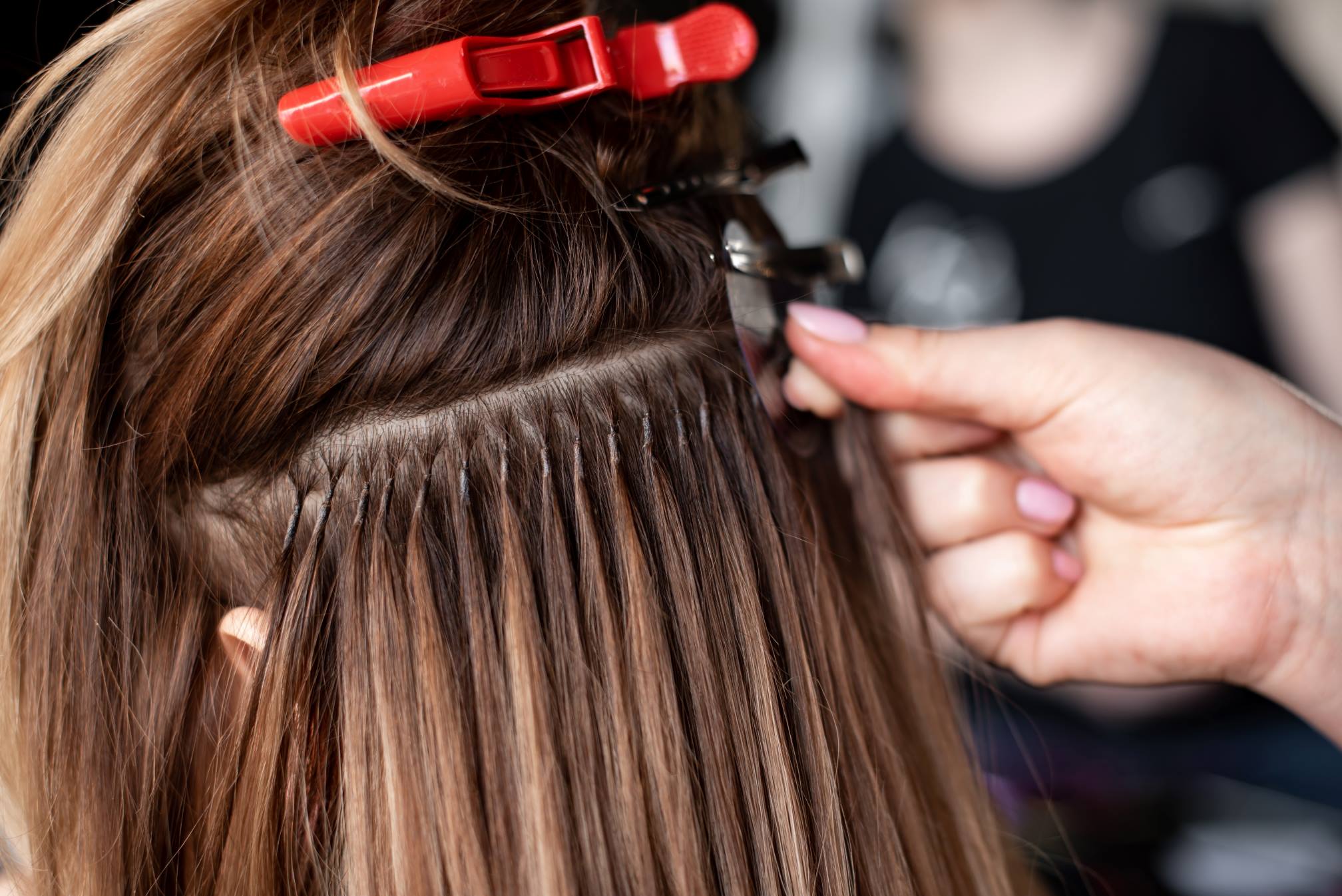
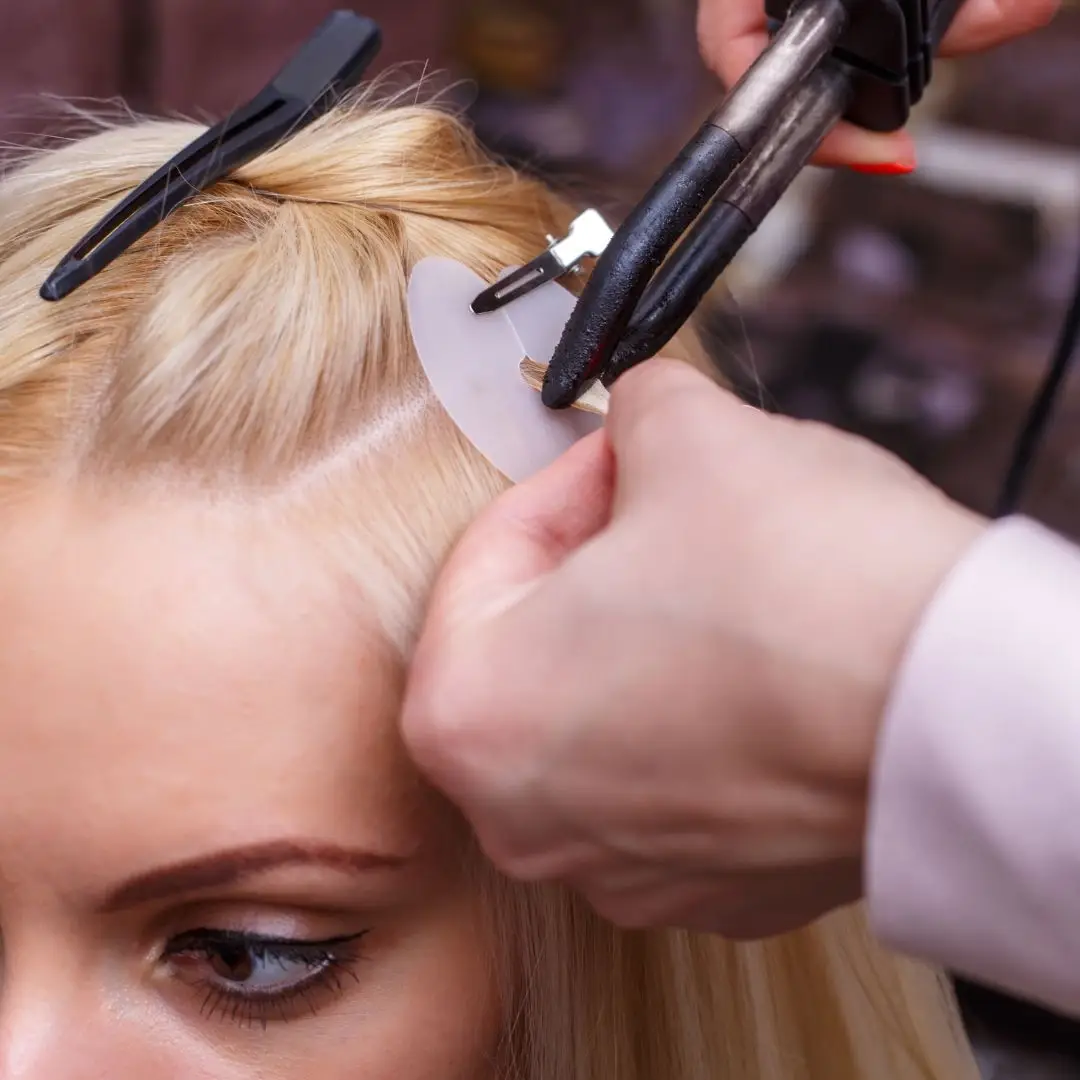
Keratin bond extensions (also called fusion or pre-bonded extensions) use individual strands of extension hair attached with a small keratin adhesive tip. A heat tool melts the keratin, which is then rolled around a section of natural hair to form a secure bond. The result is an exceptionally natural-looking extension with complete freedom of movement — each strand behaves independently, just like natural hair.
Keratin bonds offer the most versatile styling options because the individual bonds allow for updos, high ponytails, and any hairstyle without visible attachment points. They last three to four months before requiring removal and reapplication, making them the longest-wearing semi-permanent method.
The application is more time-intensive than tape-ins (two to four hours for a full head), and the heat application requires careful temperature control to avoid damaging the client’s natural hair. A hair extension course covers heat tool operation, bond size selection, sectioning patterns, and the proper rolling technique that creates small, discreet bonds.
For product knowledge and quality grading standards, Great Lengths — one of the industry’s most established extension brands — provides educational resources on human hair sourcing and quality classification.
Clip-In Extensions
Clip-in extensions are the most accessible and versatile option for clients. They consist of wefts of hair attached to small pressure-sensitive clips that snap onto the natural hair at the roots. Clients apply and remove clip-ins themselves — inserting them in minutes for events, photoshoots, or daily wear and removing them at night.
While clip-ins are not a semi-permanent service like tape-ins or bonds, offering clip-in fitting, colour matching, and cutting services is a valuable addition to your menu. Many clients purchase clip-ins as their entry point into extensions and later upgrade to semi-permanent methods once they experience the confidence that added volume and length provides.
A hair extension course teaches you to custom-cut and blend clip-in sets to match the client’s natural hair — layering, texturising, and shaping the extensions so they integrate seamlessly. This custom service commands a premium over simply selling a packaged clip-in set.
Micro-Ring and Nano-Ring Extensions
Micro-ring extensions (also called micro-bead or micro-link) attach individual strands of extension hair using tiny metal or silicone-lined rings that are clamped around a section of natural hair. No heat or adhesive is used, making this a gentle option for clients concerned about chemical or thermal damage to their natural hair.
Nano-ring extensions use even smaller rings for an ultra-discreet attachment point. They are ideal for clients with fine hair where larger bonds or tape wefts might be visible.
Application requires precision — threading a small section of natural hair through the ring, inserting the extension strand, and clamping the ring shut with pliers at the correct tightness. Too loose and the extension slips out; too tight and the natural hair is damaged. A hair extension course develops this fine motor skill through practice and expert feedback.
Client Consultation and Colour Matching
The consultation is where you demonstrate expertise and build trust. A hair extension course teaches you to assess the client’s natural hair — its condition, density, texture, and colour — and recommend the most suitable method, hair quality, and volume.
Colour matching is one of the most critical skills. Extensions that do not match the client’s natural hair colour are immediately obvious and unprofessional. You need to understand colour depth (how light or dark the hair is), tone (warm, cool, or neutral), and highlight or lowlight patterns. Most extension ranges offer a wide palette, and blending two or three shades is often necessary for a natural match.
Hair quality selection also requires expertise. Virgin human hair (unprocessed, cuticle-intact) delivers the best longevity and most natural movement. Remy hair (cuticle-aligned but may be colour-processed) offers good quality at a lower price point. Understanding the differences and advising clients honestly builds trust and prevents disappointment. A hair styling course complements your extension skills by teaching you to style and finish extensions beautifully after application.
Extension Aftercare and Maintenance
Client education on extension aftercare significantly impacts satisfaction and retention. A hair extension course covers the aftercare protocols you must communicate to every client.
Tape-in clients should avoid oil-based products near the bonds (oils dissolve adhesive), brush gently using a loop brush or extension-specific brush, and sleep with hair in a loose braid to prevent tangling. Keratin bond clients should avoid excessive heat near the bonds and use sulphate-free shampoo. All extension clients should detangle from ends to roots, avoid sleeping on wet hair, and attend maintenance appointments on schedule.
For industry best practices and continuing education, the Australian Hairdressing Council provides professional development resources.
Build a Thriving Extension Business
Hair extensions offer one of the highest revenue-per-client opportunities in the beauty industry. If you are ready to master tape-in, clip-in, keratin bond, and micro-ring methods, explore the Certificate in Hair Extensions at Australian Beauty School. With a professional extension kit included, flexible online learning, and expert tutors, you will be transforming clients’ hair and building a profitable business. Speak with a beauty pro today and start your extension career.