Gel and acrylic are the two dominant extension systems in the Australian nail industry, and every professional nail technician needs to understand both. While some techs specialise exclusively in one system, the most versatile and in-demand professionals are proficient in both — able to recommend and deliver the right system for each client’s nails, lifestyle, and aesthetic preferences. Nail courses teach you the application techniques, product chemistry, and troubleshooting skills for both systems so you can serve every client who sits at your table.
Understanding the Chemistry
Acrylic nails are created by combining a liquid monomer (ethyl methacrylate) with a powder polymer. When mixed, these two components undergo a chemical reaction called polymerisation, hardening into a durable plastic material within minutes. The reaction is exothermic (produces heat) and occurs at room temperature — no lamp curing is required.
Gel nails use a pre-mixed resin that remains in a workable, gel-like state until exposed to UV or LED light, which triggers a process called photoinitiator-driven polymerisation. The gel hardens only when cured under the lamp, giving you extended working time to shape and refine before committing.
This fundamental difference in curing mechanism is what drives the practical differences between the two systems — and understanding it is essential for troubleshooting issues like lifting, cracking, and improper curing. Nail courses cover the chemistry behind both systems so you can work with them intelligently rather than just following memorised steps.
Acrylic Application Technique
Acrylic application requires the ability to control the liquid-to-powder ratio (referred to as the bead consistency), the placement and shaping of each bead on the nail, and the filing and finishing of the cured product.
The ideal bead consistency is a medium-wet ratio — enough liquid to allow the bead to be pressed and shaped smoothly, but not so wet that it floods the cuticle area or takes too long to set. Too dry, and the bead is crumbly, difficult to shape, and prone to lifting. Achieving consistent bead quality is the foundational skill of acrylic work, and nail courses develop it through extensive practice.
Application begins at the free edge (tip of the nail), where a slightly drier bead provides structure and strength. The second bead is placed in the stress area (the apex of the nail, where the natural nail meets the extension), where maximum thickness provides structural support. The third bead covers the cuticle area, applied thinly and blended seamlessly to avoid lifting.
Filing and shaping after the acrylic has hardened refines the shape, smooths the surface, and creates the final profile. A correctly shaped acrylic nail has a thin cuticle area, a defined apex in the stress area, and a clean, even free edge. The C-curve (the curve visible when looking at the nail from the tip end) should be consistent and symmetrical.
Gel Extension Application Technique
Gel extensions can be applied using several methods: hard gel sculpted over a form, hard gel applied over a tip, or pre-shaped gel tips (like Gel-X or Apres) adhered with gel adhesive. Each method has advantages, and nail courses teach all three.
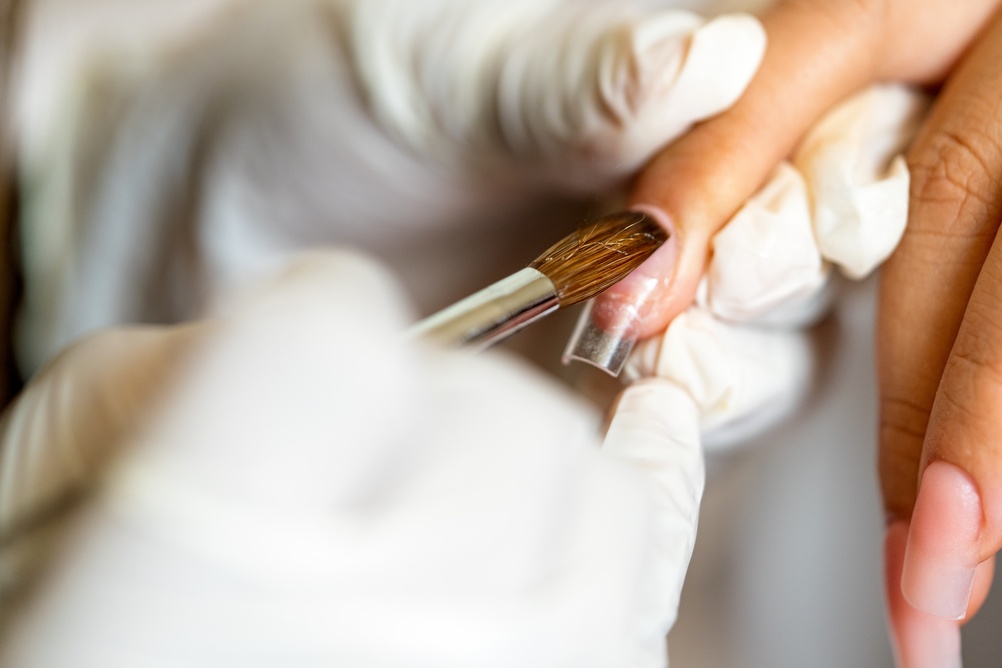
Hard gel sculpting involves building the extension directly on a paper or reusable form positioned under the natural nail. Gel is applied in thin layers, each cured under the lamp before the next is added. This technique provides maximum control over shape and length and produces a lightweight, natural-feeling extension.
Gel tip application involves adhering a pre-shaped plastic or gel tip to the natural nail and then overlaying the entire nail with hard gel for strength and a seamless finish. This method is faster than sculpting and is popular for nail technicians who want to offer extensions efficiently.
Soft gel tip systems (Gel-X, Apres) use pre-made, pre-shaped full-cover gel tips that are adhered using a gel adhesive and cured under the lamp. This method is the fastest extension application — a full set can be completed in 45 to 60 minutes — and has become extremely popular in Australian salons for its efficiency and the consistently beautiful shape of the pre-formed tips.
A nail art course builds on your extension foundation by teaching advanced decorative techniques that can be applied to both gel and acrylic surfaces.
Pros and Cons: A Professional Comparison
Acrylic pros: extremely durable and strong (ideal for clients who are hard on their hands), easily repairable (a single broken nail can be fixed without replacing the full set), wide availability of products and training, and no lamp required for curing. Acrylic cons: strong odour during application (requires ventilation), faster setting time limits working window, and can appear thicker if applied by an inexperienced technician.
Gel pros: odourless during application, extended working time before curing (more forgiving for beginners), naturally glossy finish, flexible and lightweight feel. Gel cons: can be less durable than acrylic for very active clients, requires a UV or LED lamp, and lifting issues can occur if curing is incomplete.
The right system depends on the client. A nurse who washes her hands frequently and needs maximum durability may be better suited to acrylic. A client who prioritises a natural, lightweight feel may prefer gel. A professional nail technician trained through comprehensive nail courses can assess each client’s needs and recommend accordingly.
For industry product standards and safety information, the Safe Work Australia guidelines cover chemical safety for nail salon environments.
Maintenance and Infill Techniques
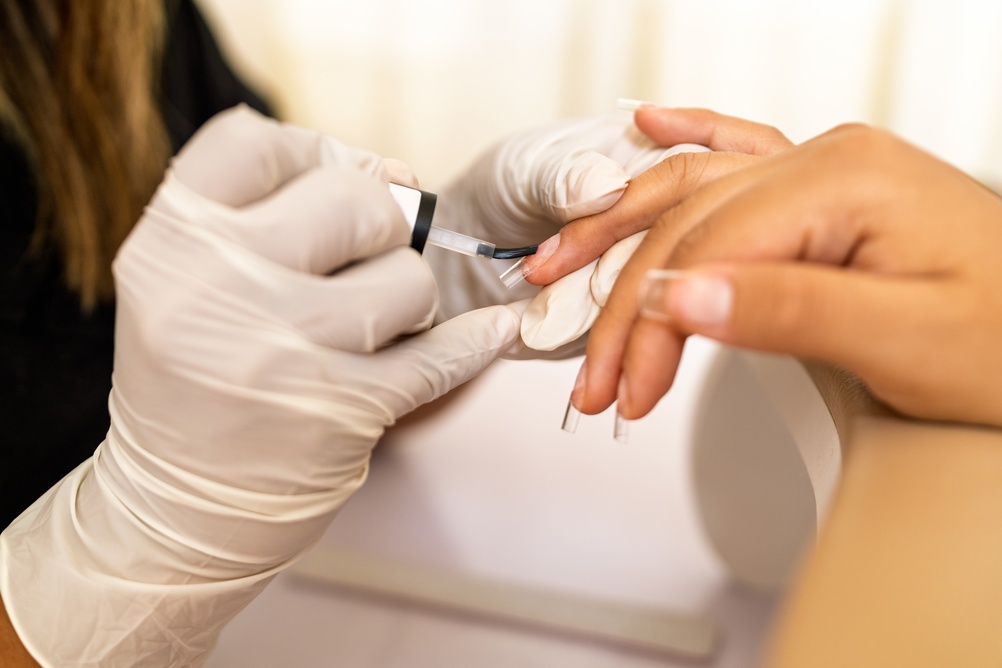
Both gel and acrylic extensions require maintenance as the natural nail grows. Every two to three weeks, a gap appears between the cuticle and the extension product, and an infill appointment fills this gap, rebalances the structure, and refreshes the finish.
Acrylic infills involve filing down the existing product to thin it (removing any lifting at the cuticle area), applying fresh acrylic to fill the regrowth gap, and reshaping the nail. Gel infills follow a similar process — filing the existing gel, applying fresh gel to the regrowth area, curing, and reshaping.
Proper infill technique is essential for the long-term health of the natural nail underneath. Over-filing the natural nail plate during infills causes thinning and weakness over time. Nail courses teach you to file with precision and care, removing only the product and never compromising the natural nail.
A manicure and pedicure course provides the foundational nail care skills that support healthy extension maintenance.
Build a Complete Nail Career
Mastering both gel and acrylic systems makes you the most versatile and employable nail technician in any salon environment. If you are ready to learn both extension methods alongside gel polish, nail maintenance, and professional practice, explore the Certificate in Nail Tech at Australian Beauty School. With a professional nail kit included, flexible online study, and expert guidance, you will be creating flawless extensions with confidence. Speak with a beauty pro and launch your nail career today.