A flawless spray tan is not just about technique — it is about understanding the science behind the product you are applying. Dihydroxyacetone (DHA) concentration, solution pH levels, bronzer undertones, skin type reactivity, and aftercare chemistry all determine whether your client walks away with a natural golden glow or a patchy orange disaster. A spray tan course teaches you the formulation science and skin analysis skills that separate professional technicians from amateurs and ensure consistently beautiful results on every client.
How DHA Works: The Chemistry of a Spray Tan
Every spray tan solution contains DHA — a colourless sugar derived from plant sources (typically sugar beet or sugar cane) that reacts with amino acids in the outermost layer of the skin (the stratum corneum) through a process called the Maillard reaction. This is the same chemical reaction that causes bread to brown in the oven or meat to caramelize on a grill, and it produces brown-tinted compounds called melanoidins on the skin surface.
The Maillard reaction takes between two and four hours to develop fully, which is why spray tan clients are advised not to shower for a specified period after application. The depth of colour depends on three primary factors: the DHA concentration in the solution, the thickness of the client’s stratum corneum, and the pH of both the solution and the client’s skin.
A spray tan course teaches you to understand these variables so you can predict and control outcomes rather than relying on guesswork. This scientific foundation is what enables you to customise every tan to the individual client.
DHA Concentrations and How to Choose
Spray tan solutions are available in a range of DHA concentrations, typically from 6 percent to 14 percent. The concentration you choose determines the depth of the final tan and should be matched to the client’s skin type, natural colouring, and desired outcome.
Low DHA solutions (6 to 8 percent) are ideal for fair-skinned clients, first-time tanners, and clients who want a subtle, natural-looking glow. These solutions produce a light to medium tan and are the most forgiving to apply — minor application inconsistencies are less visible at lower DHA levels.
Medium DHA solutions (8 to 10 percent) suit the majority of Australian clients. They produce a warm, golden-bronze tan that looks natural on light to medium skin tones. This is the workhorse concentration for most spray tan technicians.
High DHA solutions (10 to 14 percent) produce deep, dramatic tans suitable for clients with darker natural skin tones, clients who tan easily and want maximum depth, and clients preparing for bodybuilding competitions, photoshoots, or stage performances. High-DHA solutions require precise, even application because any inconsistency is amplified at higher concentrations.
Understanding the interaction between DHA concentration and development time allows you to offer rapid-tan options as well. Rapid-tan solutions use higher DHA concentrations with instructions for shorter development times (one to three hours instead of eight), giving clients flexibility while still achieving excellent results.
Undertones and Bronzer Selection
Most spray tan solutions contain cosmetic bronzers in addition to DHA. These bronzers provide immediate colour that is visible during application (acting as a guide to ensure even coverage) and wash off in the client’s first shower, leaving only the DHA-developed tan beneath.
Bronzer undertones significantly affect the final appearance of the tan. Warm-toned bronzers (golden, caramel) suit clients with warm undertones in their natural colouring — those with golden or peachy skin, warm brown or red hair, and warm eye colours. Cool-toned bronzers (olive, ash) suit clients with cool undertones — those with pink or blue-toned skin, ash brown or black hair, and cool eye colours. Violet-based bronzers are particularly effective for counteracting orange tones and are popular for clients with very fair or cool-toned skin.
A spray tan course teaches you to analyse each client’s undertone before selecting a solution, ensuring the finished tan looks naturally harmonious rather than artificially imposed. This colour-matching skill is one of the most important differentiators between a competent technician and an exceptional one. For deeper colour theory knowledge, the Pantone Colour Institute provides professional colour analysis resources.
Skin Analysis for Spray Tanning
Not all skin is created equal, and understanding how different skin types respond to spray tan solution is essential for consistent results. A spray tan course covers skin analysis as a core competency.
Skin thickness varies across the body and between individuals. Thicker skin (elbows, knees, ankles, wrists) has more layers of dead cells in the stratum corneum, which means more amino acids for DHA to react with, resulting in darker colour in these areas if you apply solution uniformly. Professional technique involves applying a barrier cream or reduced solution to these areas to prevent over-development.
Dry skin absorbs solution unevenly, creating a patchy or mottled tan. Clients should be advised to exfoliate thoroughly and moisturise (with an oil-free moisturiser) in the days leading up to their appointment. On the day, skin should be clean, dry, and free of oils, lotions, perfume, and deodorant.
Skin pH affects DHA reactivity. More acidic skin (lower pH) tends to develop a warmer, more orange-toned tan, while more alkaline skin develops cooler, more brown tones. Some solutions include pH adjusters to counteract this variability, and understanding which products perform best on different skin types is knowledge that a spray tan course develops through practical experience and formulation training.
Certain medications and skin conditions affect spray tan results. Hormonal medications, antibiotics, retinoids, and acne treatments can all alter how the skin reacts to DHA. A professional consultation before every spray tan session identifies these factors and allows you to adjust your approach accordingly.
Application Technique and Solution Science
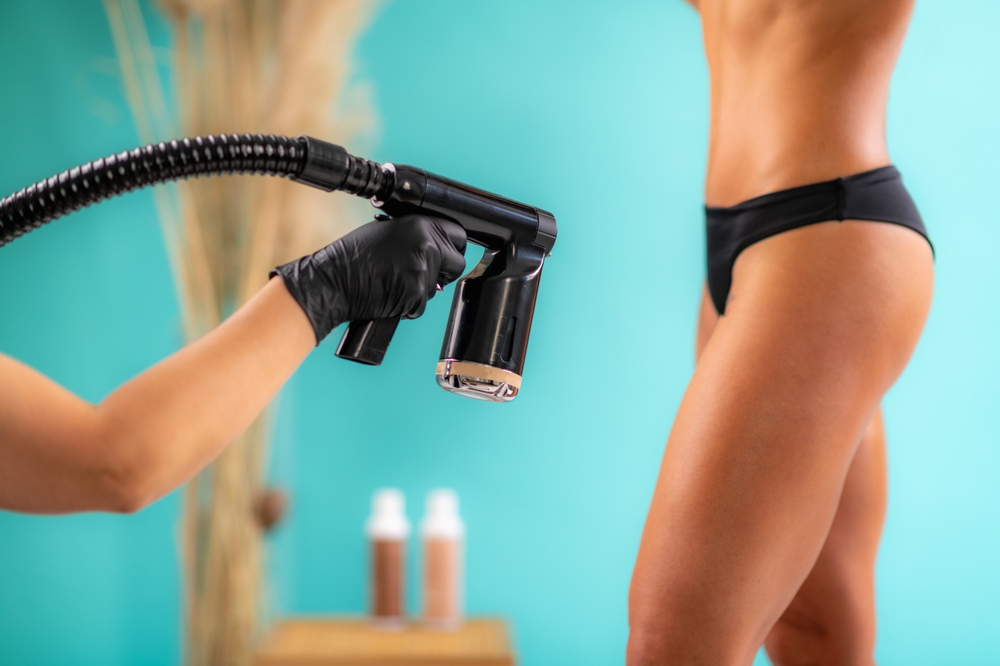
Professional spray tan application uses a HVLP (high volume, low pressure) spray gun to deliver a fine, even mist of solution across the skin. The settings of your spray gun — air pressure, solution flow rate, and nozzle pattern — interact with the properties of the solution to determine the quality of coverage.
Thinner solutions require lower air pressure and closer application distance. Thicker solutions need slightly higher pressure to atomise properly. Your distance from the client should be consistent — typically 15 to 20 centimetres — to ensure even mist distribution. Too close creates pools of solution; too far creates dry overspray.
A spray tan course teaches you the specific gun settings and application patterns that produce professional results with various solution types. You learn body-section application sequences, overlapping spray patterns for even coverage, and techniques for smoothly blending between sections to avoid streaks and demarcation lines.

Aftercare Science: Extending Tan Longevity
The longevity of a spray tan depends on the rate at which the client’s stratum corneum naturally sheds. This process — called desquamation — occurs continuously, and the treated skin cells are gradually replaced by new, untanned cells beneath. A well-maintained spray tan lasts five to ten days, and proper aftercare significantly extends the duration and evenness of the fade.
Professional aftercare advice — which you provide to every client — includes avoiding hot baths and pools (chlorine and prolonged water exposure accelerate desquamation), moisturising daily with an oil-free moisturiser to keep the skin hydrated and slow cell turnover, avoiding physical exfoliation, and patting skin dry rather than rubbing after showers.
Understanding these aftercare principles allows you to educate your clients confidently and manage their expectations about tan longevity. Clients who follow aftercare advice have better results, return more frequently, and refer more new clients. For professional product and aftercare recommendations, Beauty Industry Group provides industry resources.
A beauty therapy course in complementary services like body waxing can further expand your treatment menu, as many clients combine waxing and spray tan services.
Turn Tan Science Into a Career
Understanding the science behind spray tanning transforms you from a technician who follows instructions into a professional who can troubleshoot, customise, and consistently deliver exceptional results. If you are ready to master spray tan chemistry, skin analysis, and professional application technique, explore the Certificate in Spray Tanning at Australian Beauty School. With a professional spray tan kit included, flexible online study, and expert tutors, you will be delivering flawless tans from your first client. Speak with a beauty pro and start your spray tanning career today.